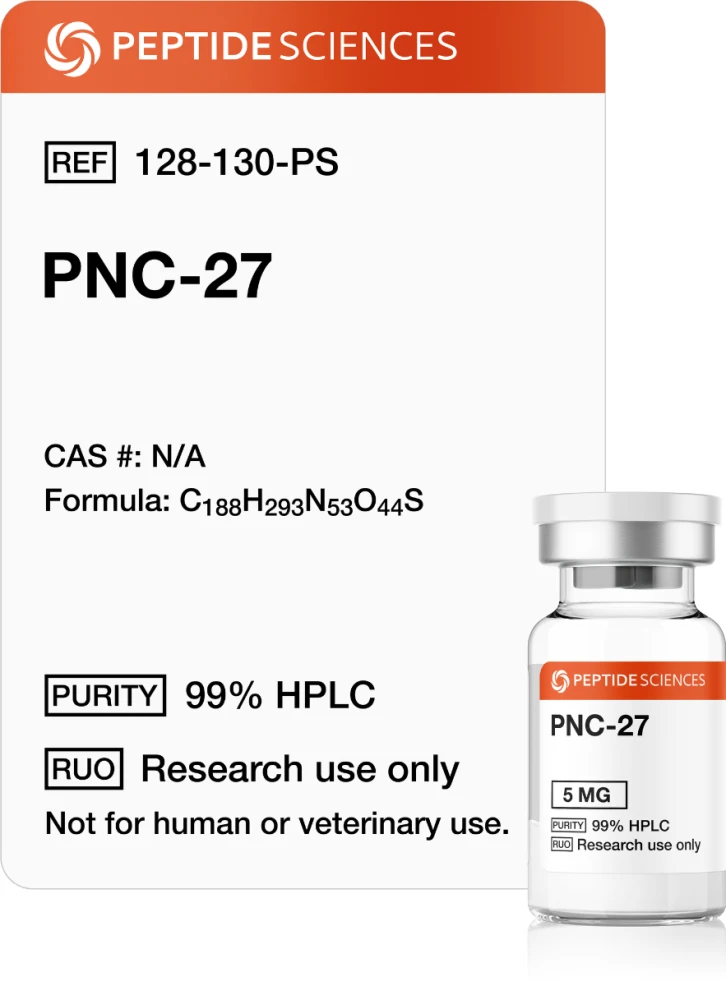
Molecular Formula: C₁₈₈H₂₉₃N₅₃O₄₄S Molecular Weight: 4031.7 g/mol Sequence: HDM-2 binding domain (p53 residues 12-26) + transmembrane-penetrating domain Purity: >99% | Vial Size: 5mg | Storage: -20°C, protect from light
Product Overview
PNC-27 represents breakthrough selective cancer cell targeting research technology. This engineered peptide binds HDM-2 proteins to prevent interaction with p53 tumor suppressor pathways. Unlike conventional treatments affecting healthy and malignant cells equally, PNC-27 demonstrates remarkable selectivity, destroying cancer cells through membranolysis while leaving normal tissue completely unharmed.
Revolutionary Selective Mechanism
PNC-27 incorporates dual functional domains: HDM-2 binding region (p53 residues 12-26) and transmembrane-penetrating sequence. This structure enables specific recognition of HDM-2 proteins uniquely present in cancer cell membranes but absent from healthy cells. Upon binding, PNC-27 forms oligomeric pores causing rapid cancer cell death through osmotic pressure while preserving surrounding healthy tissue.
Mechanism of Action - Membranolysis
The peptide kills cancer cells through membranolysis - selective membrane destruction. When PNC-27 binds HDM-2 proteins in cancer membranes, it creates pores causing rapid cell implosion due to osmotic pressure differences. This swift destruction occurs exclusively in malignant cells while healthy cells remain unaffected.
Primary Research Applications
Pancreatic Cancer Research Clinical studies show exceptional efficacy against pancreatic cancer including ras-transformed rat acinar carcinoma cells (BMRPA1). Research demonstrates complete tumor growth blockade during administration with sustained suppression lasting weeks post-treatment.
Breast Cancer Studies Significant activity against various breast cancer cell lines provides selective tools for targeted therapy research. The peptide distinguishes between malignant and normal mammary tissue, enabling precision oncology approaches.
Leukemia Research 2014 studies confirm effectiveness against non-solid tumors including poorly differentiated leukemia cell lines. Leukemia cells express HDM-2 in plasma membranes, making them susceptible to PNC-27's membranolytic effects.
Melanoma & Multi-Cancer Research Broad-spectrum activity across melanoma and diverse cancer types while maintaining selectivity makes PNC-27 invaluable for comparative oncology and mechanism studies.
Clinical Research Timeline
Week 1: Pain reduction observed Week 3: Flu-like symptoms indicating immune activation Week 6: Elevated LDH/bilirubin suggesting tumor breakdown Week 10: Tumor softening, temporary size increases Month 3: Increased energy, reduced symptoms
HDM-2 Targeting Specificity
Cancer cells uniquely express significant HDM-2 proteins in membranes while normal cells maintain minimal expression. This differential provides PNC-27's selectivity. Research confirms artificially HDM-2-implanted normal cells become susceptible, validating the HDM-2-dependent mechanism.
Research Advantages
Selective Targeting: Exclusive cancer destruction with healthy cell preservation
Broad Spectrum: Effective across multiple cancer types
Novel Mechanism: Unique membranolytic action independent of apoptosis
P53 Independent: Functions regardless of p53 status
Low Toxicity: Minimal side effects vs conventional treatments
Multiple Routes: Subcutaneous, oral bioavailability confirmed
Safety Profile
Animal studies show manageable effects: transient skin inflammation, temporary blood pressure elevation, mild GI effects, reversible proteinuria. Significantly reduced toxicity compared to chemotherapy reflects selective mechanism sparing healthy tissue.
Quality Specifications
Every batch undergoes comprehensive QC:
HPLC purity analysis (>99%)
Mass spectrometry verification (4031.7 g/mol)
Amino acid sequence confirmation
Endotoxin testing (<1.0 EU/mg)
USP sterility testing
Certificate of Analysis provided
Storage & Reconstitution
Store lyophilized at -20°C in sealed vials. Protect from light/humidity. Reconstitute with bacteriostatic water before use. Use within 24 hours or store -80°C short-term. Avoid freeze-thaw cycles.
Research Protocol Applications
Direct tumor injection for localized studies
Systemic administration for metastasis research
Combination therapy protocols
Dose-response optimization
Long-term efficacy/safety evaluations
Comparative treatment studies
Historical Development
Developed by Drs. Pincus and Michl at SUNY Downstate (2000), initially for HIV research. Cancer-selective properties discovered during subsequent investigations, leading to extensive oncology applications representing precision medicine paradigm shifts.
Research Applications Summary
Selective cancer targeting studies
Pancreatic, breast, leukemia, melanoma research
HDM-2 pathway mechanism studies
Membranolysis and cell death research
Precision oncology development
Cancer selectivity mechanisms
Combination therapy optimization
Regulatory Compliance
Manufactured under strict GMP for research only. Not approved for human consumption or therapeutic use. Researchers must follow institutional guidelines, obtain ethics approvals, and maintain biosafety protocols for oncology research.
Research Use Only: Not for human/veterinary therapeutics. Handle per laboratory safety and institutional research guidelines.
